

To clean grout haze, first find out what kind of grout was used and what the tile is made of. Cement grout haze on porcelain or ceramic usually comes off with water and a white nylon pad, or with a grout haze remover once the grout has cured. Epoxy haze needs an epoxy-specific remover. Natural stone such as marble must never get an acid-based cleaner.
This guide walks through each case, plus paint and caulk on new tile. Grout haze is one of the most common items we clean in a final construction clean after a kitchen or bathroom remodel.
What grout haze is
When tile is grouted, a thin film of grout is left on the tile faces. The installer wipes most of it off while it's wet, but a little always stays and dries into a dull, cloudy layer. On glossy porcelain it looks like a milky film. On matte tile it shows as a grey cast or as streaks and swirl marks that appear in low light.
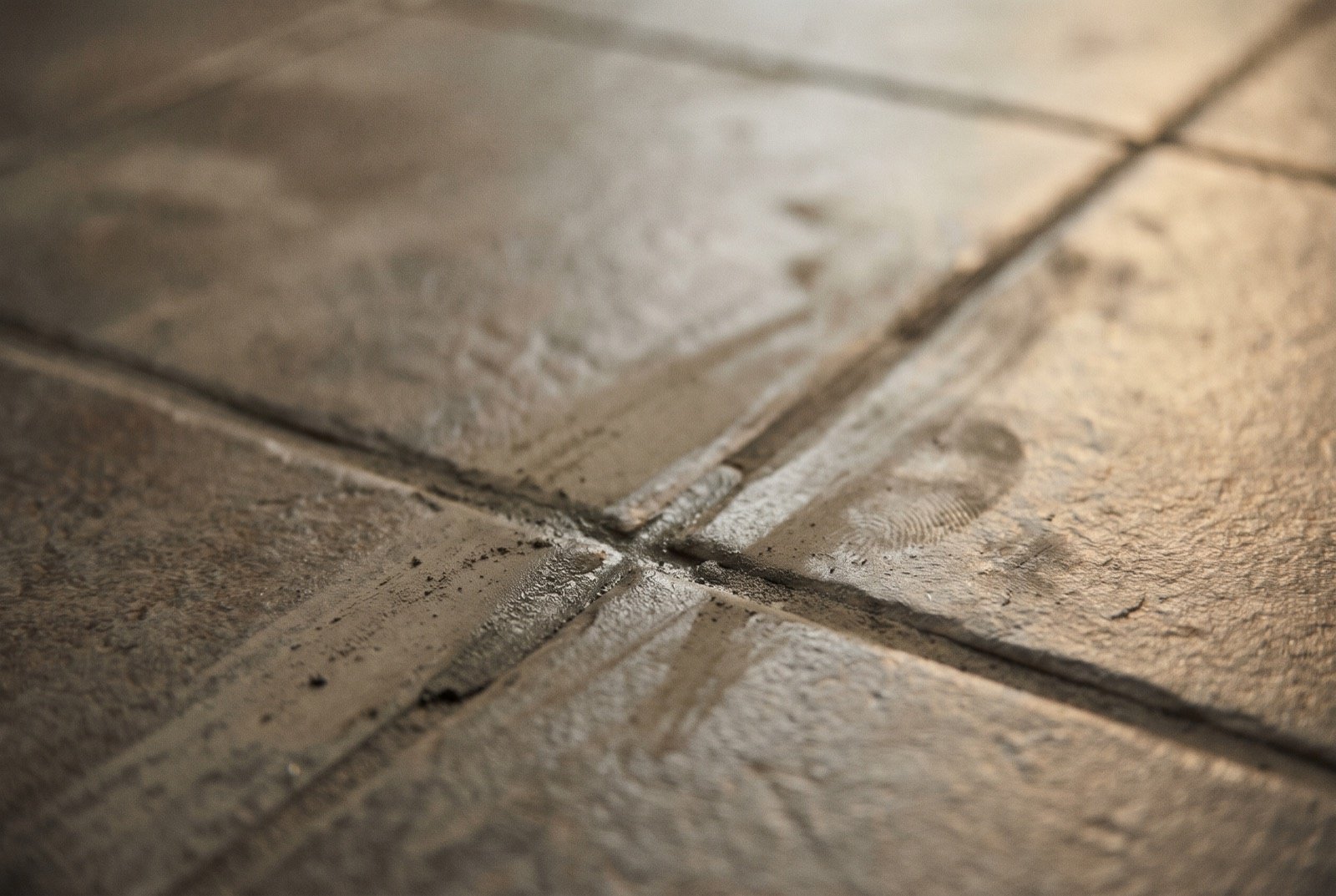
Grout haze is not dirt, so ordinary cleaners don't remove it. You either dissolve it or wear it off gently, without damaging the tile or the new grout lines.
Check the grout type and the tile first
Two questions decide the method. Ask the installer, or check the leftover bags and buckets on site.
What grout was used?
- Cement grout (sanded or unsanded) is the most common. It comes as a powder mixed with water.
- Epoxy grout comes as two or three parts mixed together. It's used in showers and kitchens for stain resistance, and its haze behaves differently.
- Urethane or premixed grout comes ready to use in a tub. Follow the maker's cleaning instructions exactly.
What is the tile?
- Porcelain and glazed ceramic are hard and resist most cleaners.
- Natural stone, such as marble, limestone, travertine and onyx, is damaged by acid. Acid etches the surface into dull spots that need professional polishing.
- Glass, metallic and specialty glazes can scratch or lose their finish. Read the tile maker's care sheet.
Then check the grout maker's instructions for cure time. Grout needs time to harden before any chemical cleaner touches it, and the wait varies by product, from a day to a week or more.
Removing cement grout haze
Start with the gentlest method and only step up if the haze stays.
- Dry buff. For light haze, buff with a dry microfiber cloth or cheesecloth. This often removes most of it.
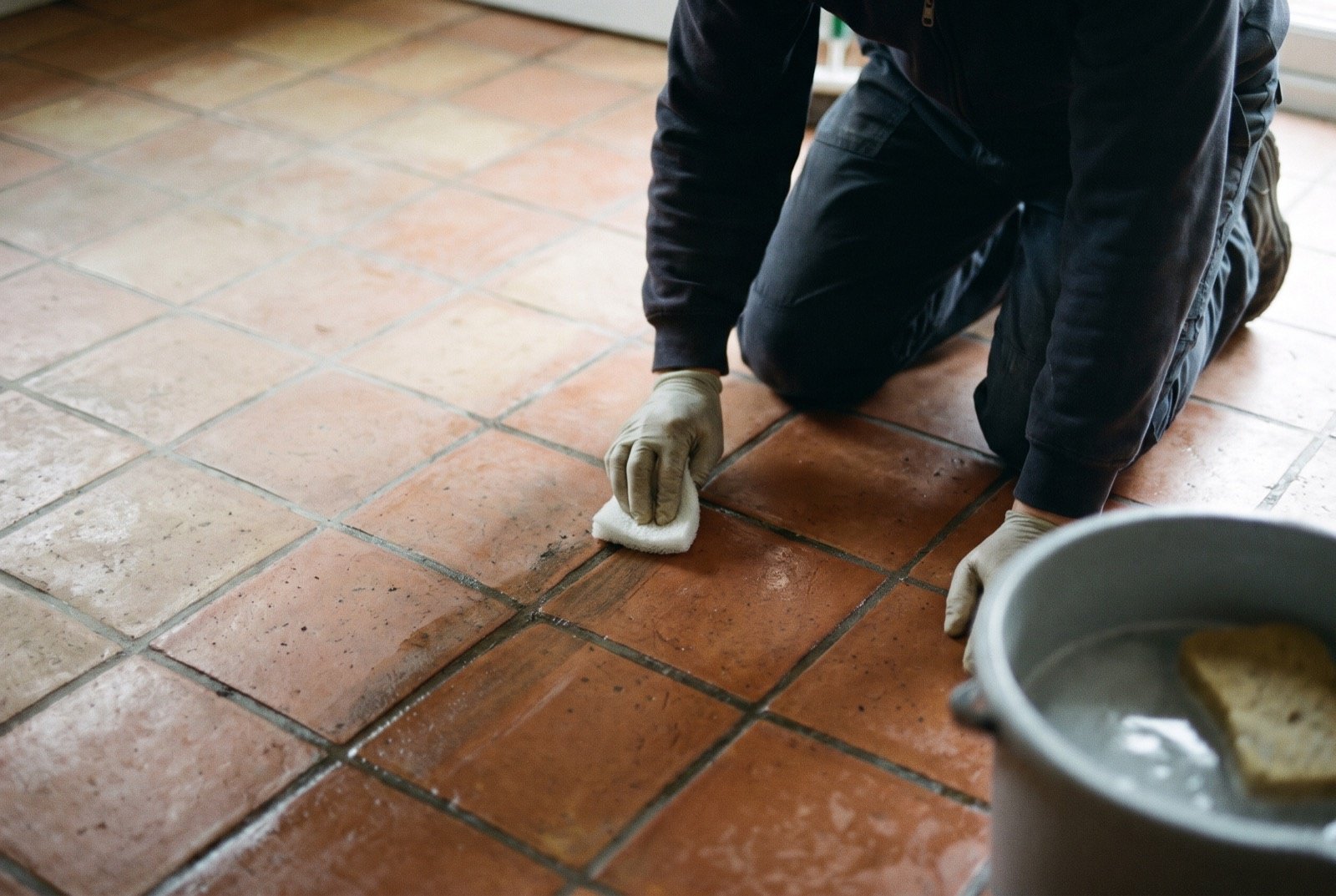
- Water and a white nylon pad. Dampen a small area with clean water and work it with a white nylon scrub pad in small circles. White pads are the least abrasive kind. Don't use green pads or steel wool on glazed tile.
- Rinse and dry. Wipe with clean water and a sponge, then dry with a clean cloth so the haze doesn't redeposit as the water evaporates.
- Grout haze remover, after cure. If the film is still there once the grout has fully cured, use a grout haze remover made for porcelain and ceramic. Many are mildly acidic. Wet the grout joints with clean water first so the cleaner doesn't soak into the new grout, apply it to the tile, agitate with the white pad, then rinse well with clean water several times.
Test first. Try any cleaner on a spare tile or a hidden corner, and follow the label for dilution and contact time.
Epoxy grout haze
Epoxy is much harder to remove once it sets, so timing matters most.
- While it's fresh, the installer should remove epoxy residue with water and the cleanup method the grout maker specifies, within its working time.
- Once it has cured, plain water won't touch it. Use a remover made specifically for epoxy grout haze. Follow the label closely: these products often need longer contact time and more than one application.
- Don't scrape hard or use strong solvents that the maker doesn't recommend. You can scratch the tile or soften the grout lines.
If epoxy haze is heavy and fully cured, ask the installer to deal with it. It's often covered by their workmanship.
Natural stone: what not to use
Marble, limestone, travertine and onyx need extra care:
- No acid. Vinegar, lemon, and acidic grout haze removers etch the stone. On polished marble, an etch looks like a dull water spot that won't wipe off.
- Use a stone-safe haze remover, labeled for natural stone, or a pH-neutral stone cleaner with a white pad.
- No steel wool. It scratches, and its fibers can leave rust stains on stone and in grout.
- Seal afterwards if the stone or grout calls for it. Clean first, wait until everything is dry, then seal according to the sealer's instructions.
Paint and caulk on tile
Remodels leave other residue on new tile too:
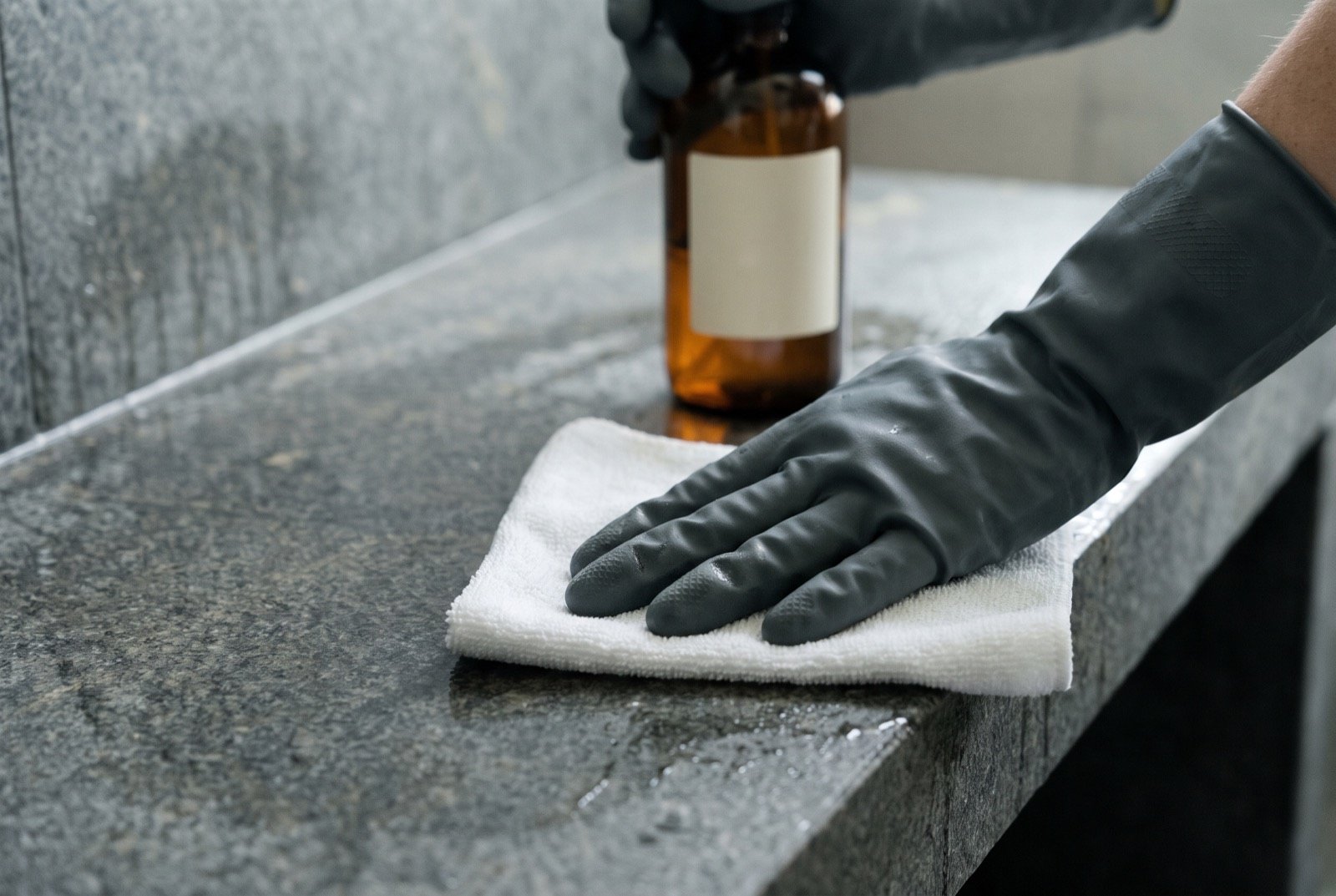
- Latex paint drips usually soften with warm soapy water. On glazed porcelain and ceramic, a new single-edge razor blade held almost flat, with plenty of soapy water as a lubricant, lifts dried drops. Never use a metal blade on polished stone or glass tile; use a plastic blade instead.
- Caulk smears come off with a plastic scraper and a cloth. A caulk remover can help with cured silicone; test it on the tile first.
- Adhesive and tape residue lifts with a citrus-based adhesive remover on most porcelain. Wipe it off afterwards with clean water.
The same care applies to glass: see the post-construction cleaning checklist for how we handle labels and paint on new windows during a final clean.
When to call the installer or a cleaner
Stop and get help when:
- The haze is still there after two careful attempts. More scrubbing can dull the tile.
- The grout is epoxy and fully cured.
- The tile is natural stone and you aren't sure what's safe.
- The installer's warranty is involved. Many installers will come back and clean their own haze; check before you hire anyone.
- The tile is only part of the problem. After a remodel there's usually drywall dust everywhere too; see how to clean drywall dust.
Contractors can put grout haze on the punch list and assign it to the cleaning sub; our construction punch list template has a column for that.
Book a final clean
A final clean after a bathroom or kitchen remodel covers grout haze, paint and labels on glass, dust inside every cabinet and drawer, and the floors cleaned to their material. Homeowner remodel cleans start from $350 for a single room or bathroom and from $450 for a kitchen; see pricing and cleaning after a remodel.
Request a bid and tell us which rooms were remodeled, the tile and stone used, and when you'd like the clean done.


