
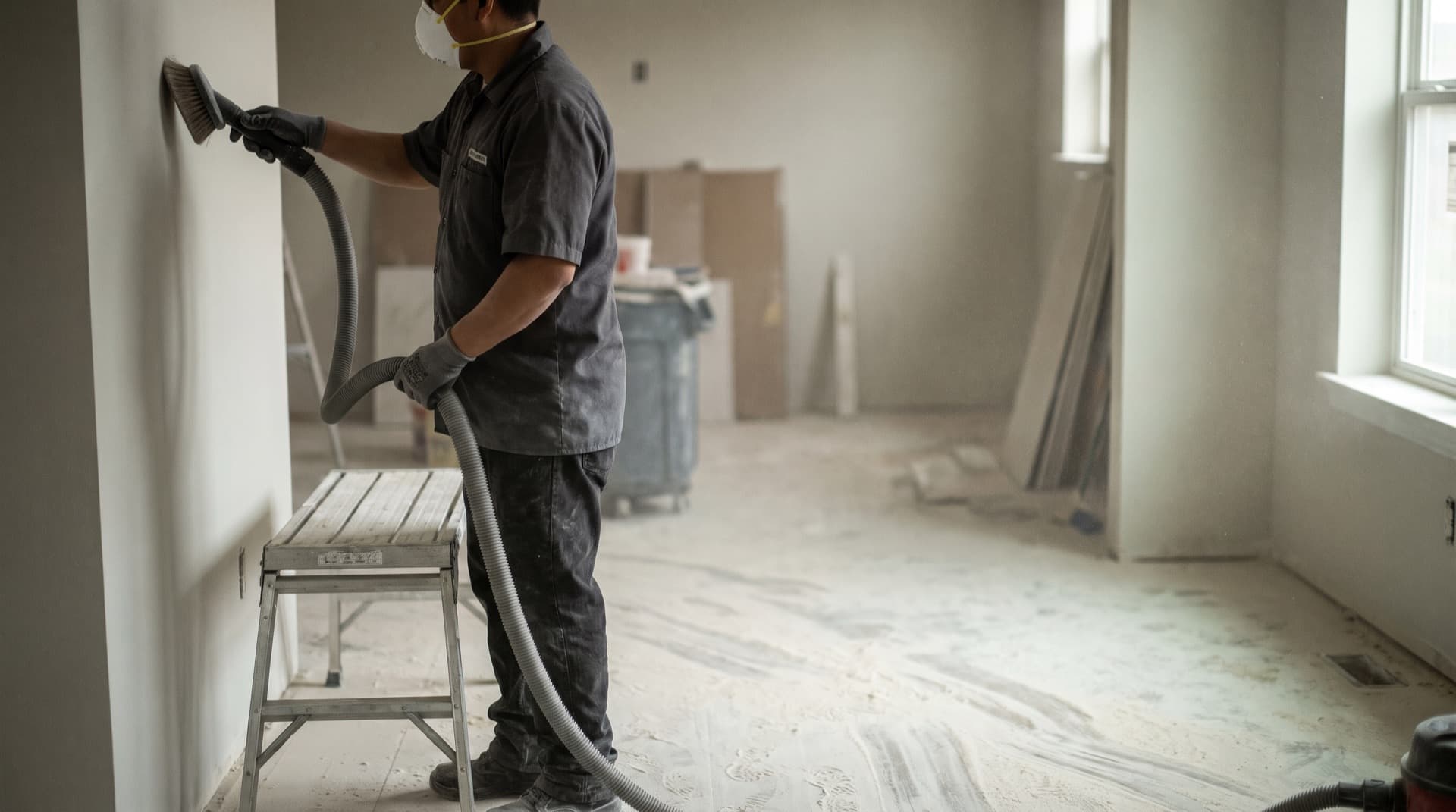
To clean drywall dust, work from the top of the room down and dry before wet: vacuum every surface with a HEPA vacuum first, then wipe with a barely damp microfiber cloth, rinsing it often. Wiping or mopping first turns the fine powder into a thin paste that smears and dries as a white film.
This guide covers walls, ceilings, hard floors, carpet and the heating and air system, plus the mistakes that spread dust into rooms that were clean. If you are coming out of a remodel and would rather hand it off, our cleaning after a remodel page explains what a professional clean covers.
Why drywall dust is hard to clean
Drywall dust comes from sanding joint compound and cutting gypsum board. The particles are far finer than household dust, so they:
- Float. Every sweep or shake sends them back into the air, and they settle again on whatever you cleaned a minute ago.
- Get everywhere. Into cabinets and drawers, light fixtures, window tracks, outlet boxes and the air ducts.
- Turn to paste with water. A wet mop on a dusty floor leaves streaks of thin plaster that dry white and cloudy.
- Clog ordinary vacuums. A regular vacuum's bag and filter fill with fine dust in minutes. Much of it passes straight through and back into the room, and the motor can overheat.
Wear an N95 mask while you clean, and open windows if the weather allows. Joint compound can contain fine mineral particles you don't want to breathe.
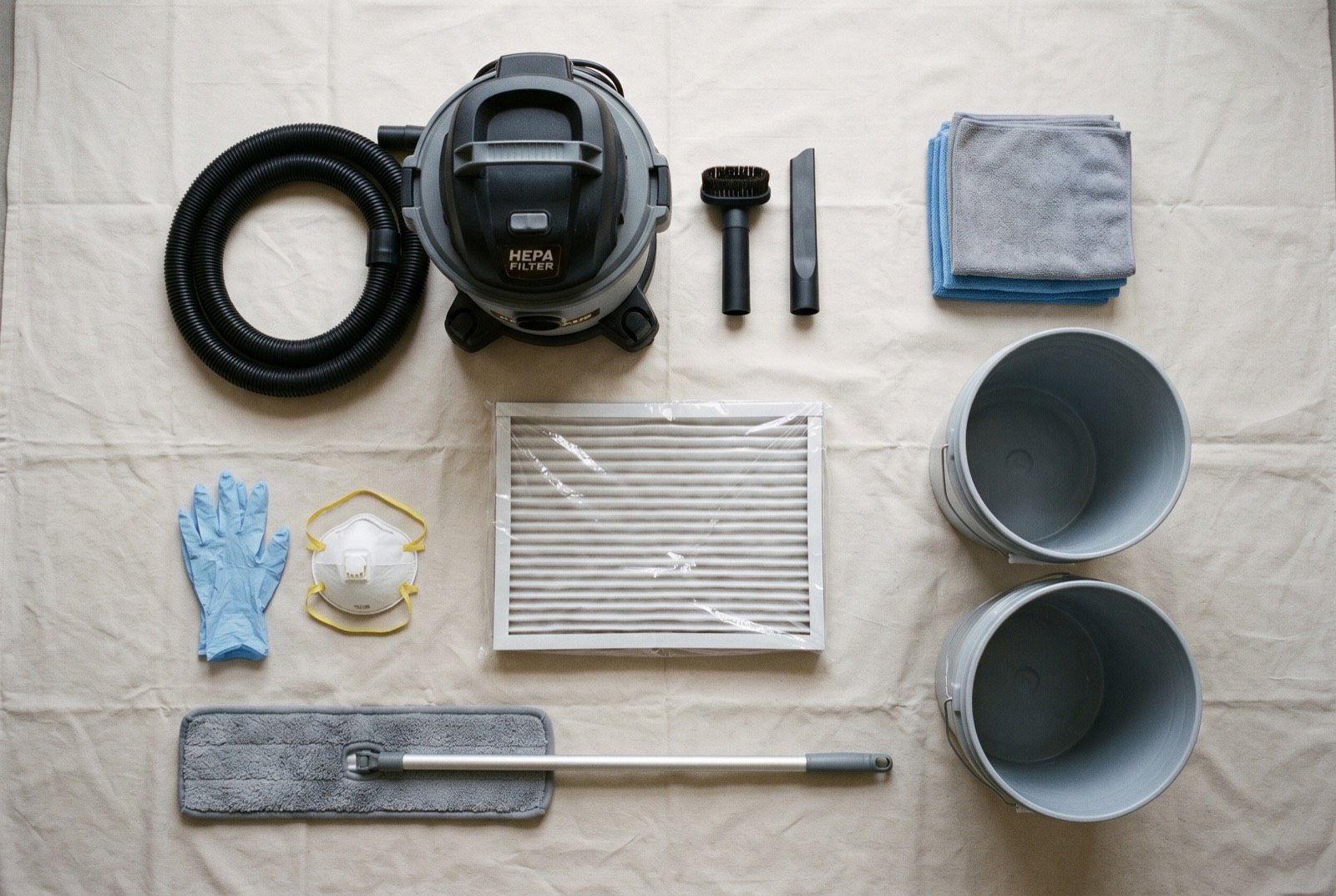
What you need
- A vacuum with a HEPA filter, with a soft brush, a crevice tool and a floor head. A shop vacuum is fine if it has a HEPA cartridge and a fine-dust bag.
- Plenty of microfiber cloths. More than you think; you'll change to a clean one often.
- Two buckets: one with clean water, one for rinsing.
- A flat microfiber mop with spare pads.
- New air filters for the heating and air system.
- An N95 mask, gloves and safety glasses for overhead work.
- A step ladder for ceilings, fans and the tops of doors and cabinets.
Step by step, top to bottom
Dust falls. Clean the highest surfaces first so anything you knock loose lands on surfaces you haven't cleaned yet.
- Turn off the heating and air system so it doesn't pull dust into the ducts while you work.
- Vacuum high: ceilings, crown molding, light fixtures, fan blades, the tops of doors, window and door frames, and the tops of upper cabinets.
- Vacuum the walls top to bottom with the soft brush.
- Vacuum the low surfaces: sills, baseboards, outlet covers, inside cabinets, drawers and closets.
- Vacuum the floor, edges and corners first.
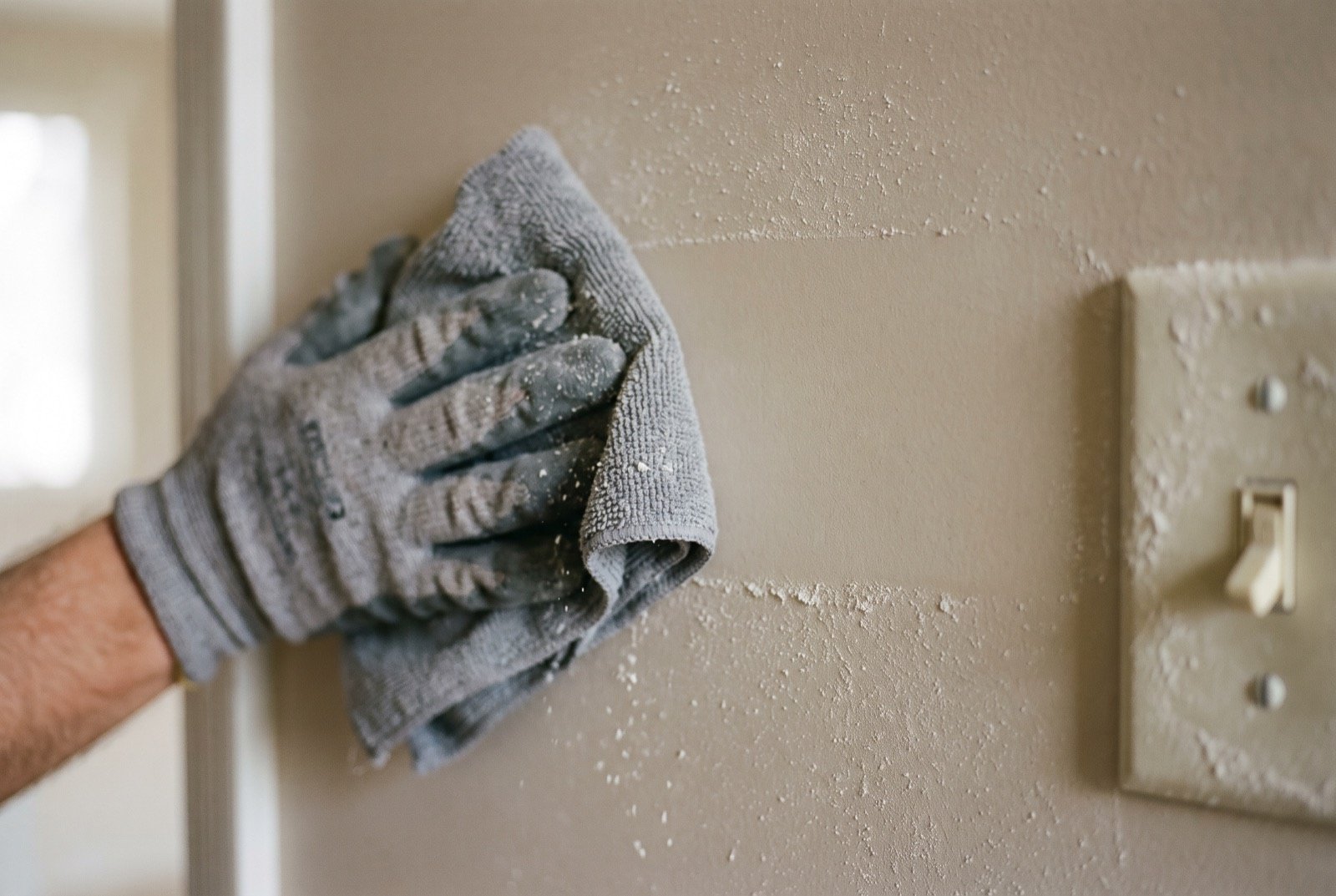
- Wipe everything with a barely damp microfiber cloth, in the same top-to-bottom order. Fold the cloth into quarters and turn to a clean side often.
- Damp mop hard floors last, then let the room air-dry.
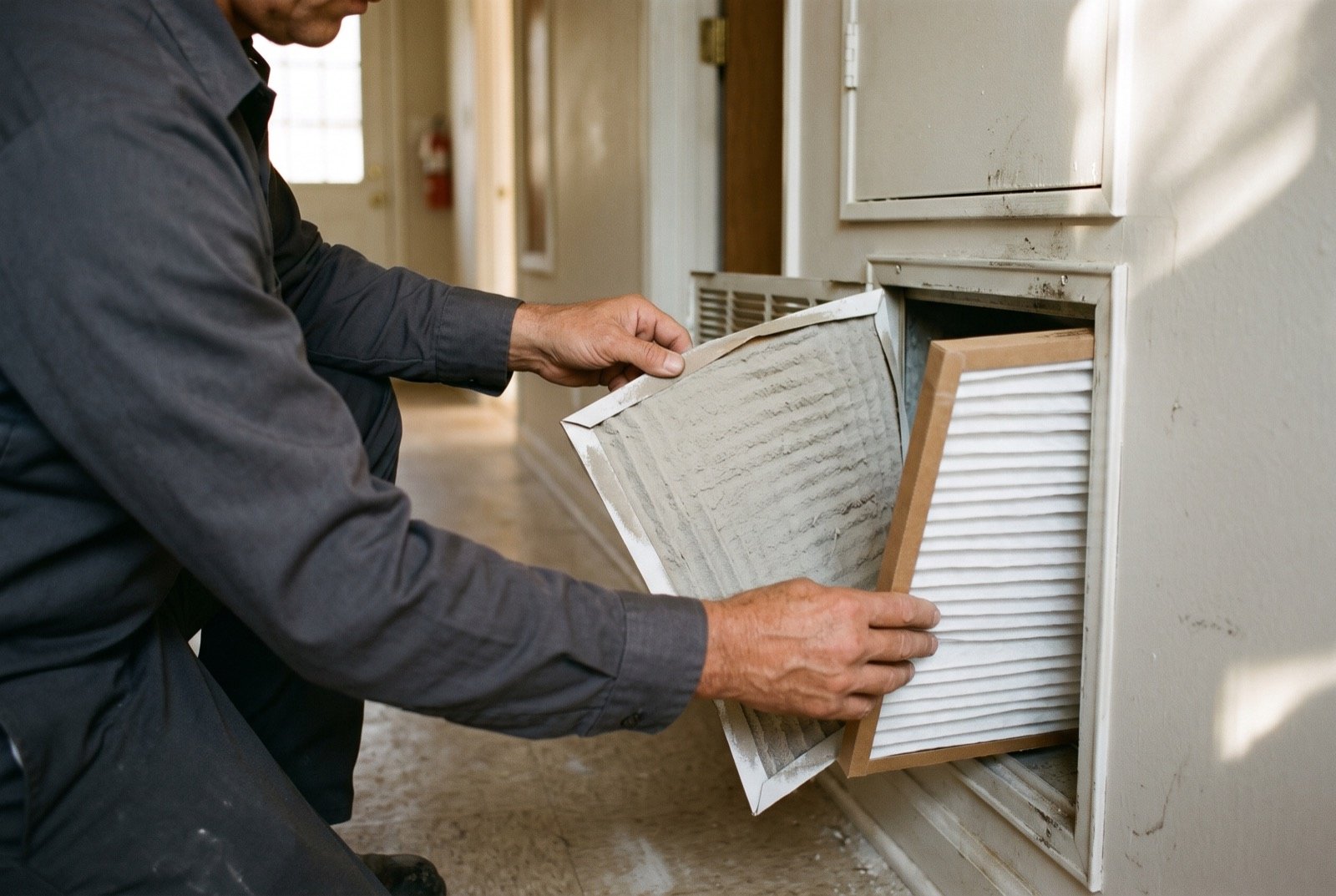
- Change the air filters before you turn the system back on.
Do one room at a time and close its door when you finish, so dust from the next room doesn't drift back in.
Walls and ceilings
New paint is soft for the first few weeks, and flat paint marks easily. Treat walls gently:
- Vacuum first with the soft brush attachment, overlapping strokes from the ceiling line down.
- Then wipe lightly with a barely damp microfiber cloth. Wring it until it feels almost dry. You are lifting dust, not washing the wall.
- Don't scrub. Hard rubbing can burnish flat paint into shiny patches.
- Rinse the cloth constantly. A cloth loaded with dust just moves it around.
For textured ceilings, vacuum only. Moisture can loosen popcorn or knockdown texture.
Hard floors
Floors take the most dust, and they're where water causes the most trouble.
- Vacuum twice. Once along the edges and corners, once across the whole floor. Don't sweep: a broom throws fine dust back into the air.
- Damp mop with clean water and a flat microfiber mop. Change the pad as soon as it looks grey, and change the water often.
- Expect two or three passes. If the floor dries with a white haze, there was still dust on it. Vacuum again and repeat.
- Use as little water as possible on wood. Sealed hardwood and engineered floors need a well-wrung pad and no standing water. Check the floor maker's care instructions before using any cleaner.
- Tile and stone can take more water, but grout lines hold dust. A soft brush along the grout before the final mop helps.
Carpet
Carpet hides drywall dust deep in the pile, and it keeps releasing it every time someone walks across.
- Vacuum slowly, in overlapping passes in two directions, with a HEPA vacuum.
- Go over it more than once, on different days if you can. Dust works its way up from deep in the pile.
- Empty the vacuum and clean its filter often. Fine dust clogs it fast and reduces suction.
- Consider hot water extraction from a carpet cleaning service if dust keeps coming up. Don't shampoo it yourself while the carpet is still full of dust; you'll make mud in the backing.
Vents, filters and returns
If the heating or air ran during sanding, there is dust in the system.
- Replace the air filter now, and again a week or two later. The first one will load up quickly.
- Vacuum the registers and return grilles, and wipe them with a damp cloth.
- Run the fan with the new filter for a few hours to pull loose dust out of the ducts into the filter, then check the filter again.
- Ask an HVAC company about duct cleaning if the system ran for days during sanding without a filter, or if dust keeps blowing out of the registers.
Mistakes that spread the dust
- Sweeping. It throws the finest dust back into the air.
- Mopping before vacuuming. It makes paste.
- Using a regular vacuum without a HEPA filter. It blows fine dust back out and can burn out the motor.
- Cleaning bottom to top. You'll clean the floor twice.
- Running the heating or air without a filter, or with the old one.
- Leaving doors open between clean rooms and dusty ones.
- Shaking out cloths or drop cloths indoors. Fold them inward and carry them outside.
When to hire a post-construction clean
Drywall dust after a single patch job is a weekend task. After a full remodel, it is several days of careful, repeated work, and it usually comes with more: grout haze on new tile, paint on glass, labels on windows, and dust inside every cabinet and appliance.
A final construction clean handles all of it in one visit, top to bottom, with HEPA vacuums and the right products for each finish. If grout haze is part of the problem, see how to clean grout haze. For the full list of what a professional clean covers, see the post-construction cleaning checklist.
Homeowner remodel cleans start from $350 for a single room or bathroom and from $450 for a kitchen; see pricing. Request a bid and tell us which rooms were remodeled and when you'd like to move back in.


